" height="136px" id="PfaV7hBGi" transform="translate(119 2)" width="40px"/><path d="M 39.868 162.364 L 0 122.39 L 0 39.974 L 39.868 0 Z M 78.938 97.221 L 119 97.221 L 119 138 L 67.562 190 L 40.359 162.712 L 78.938 124.013 Z" fill="rgb(0, 0, 0)" height="189.99999947846123px" id="rWSc6CRIY" width="119px"/></g></svg>)
Capital One
The Exchange
Client
Capital One
Platform
Figma
Role
UX Designer
Focus
UX Design, UI Design, Hi-Fi Prototyping
Optimizing the Third-Party API Implementation Process for The Exchange
A UX Case Study: Improving Clarity, Reducing Friction, and Accelerating API Integrations
Introduction
Overview
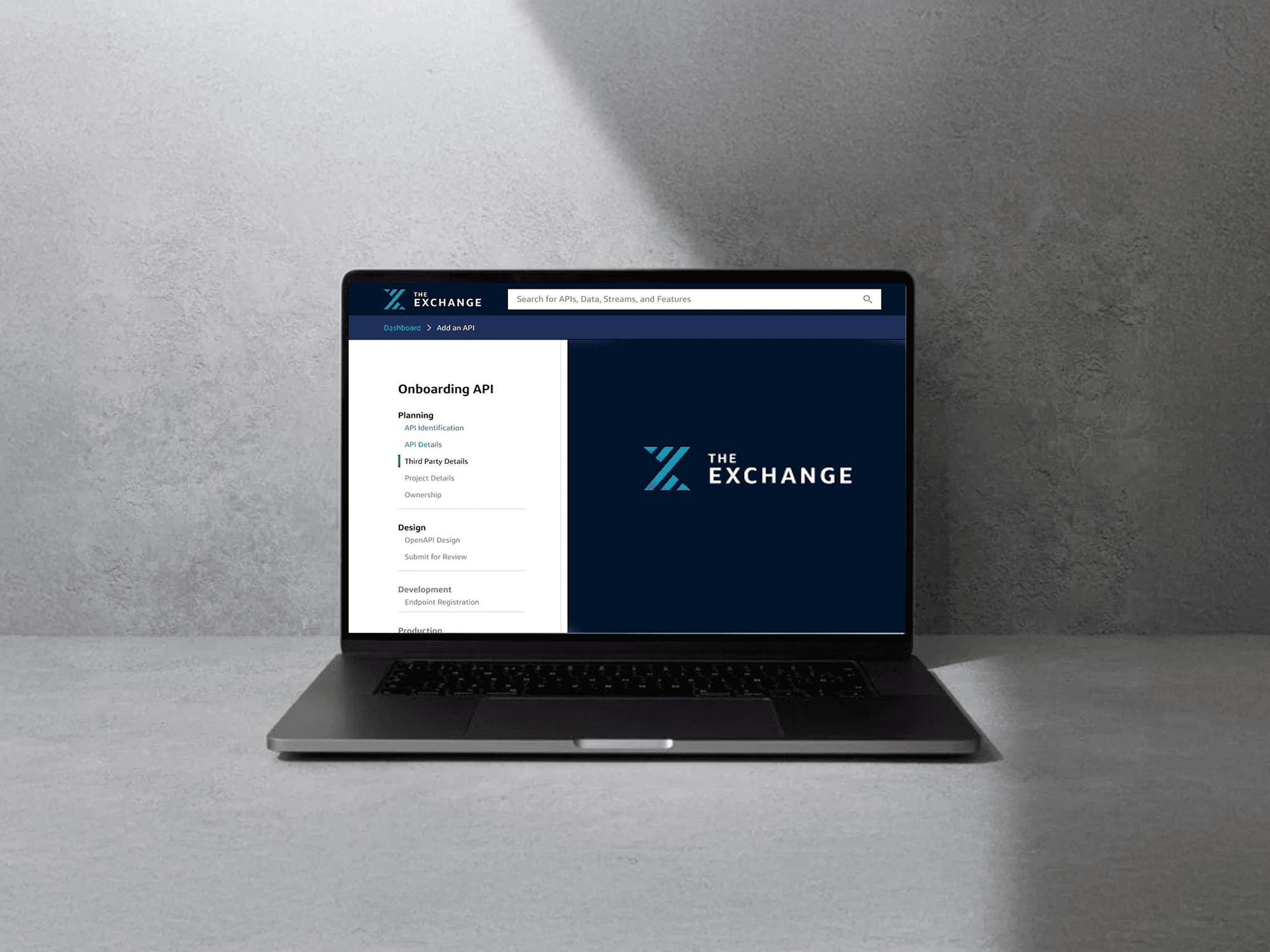
The Exchange is Capital One’s internal platform where teams register, review, and onboard APIs. Backend users—including engineers, compliance reviewers, and internal product teams—rely on it to manage the lifecycle of third-party APIs. Although powerful, the workflow for submitting and approving third-party APIs had become slow, fragmented, and difficult to navigate.
The Challenge
The existing interface forced users to jump between multiple panels, interpret unclear requirements, and repeat work when forms were submitted incorrectly. The process was slowing down review cycles and creating unnecessary friction between technical and non-technical teams.
Role & Scope
As the Senior UX/UI Designer on the Capital One contract, I led the optimization effort—from research through design and testing. I partnered closely with engineering teams, the API Governance group, IT security, and product owners. The project spanned several weeks and focused on high-impact improvements for backend users working in a fast-paced, highly regulated environment.
Approach
I applied human-centered design principles, including workflow analysis, competitive & comparative research, structured usability testing, and iterative prototyping in Figma.
Outcome
The redesign produced a far more intuitive submission and review process, clarified compliance requirements, reduced errors, and improved speed of API onboarding.
Process Overview
My process followed a clear HCD framework:
Discovery – Interviews, workflow mapping, usability audits, requirement clarification
Research – User interviews, competitive analysis, taxonomy review
Design Iterations – User flows, wireframes, prototypes, design system alignment
Validation – Usability testing, iteration cycles, developer feasibility checks
Final Deliverables – High-fidelity UI, interaction patterns, annotated specs
This structured approach allowed the team to move through ambiguity and uncover high-value areas for optimization.
Research
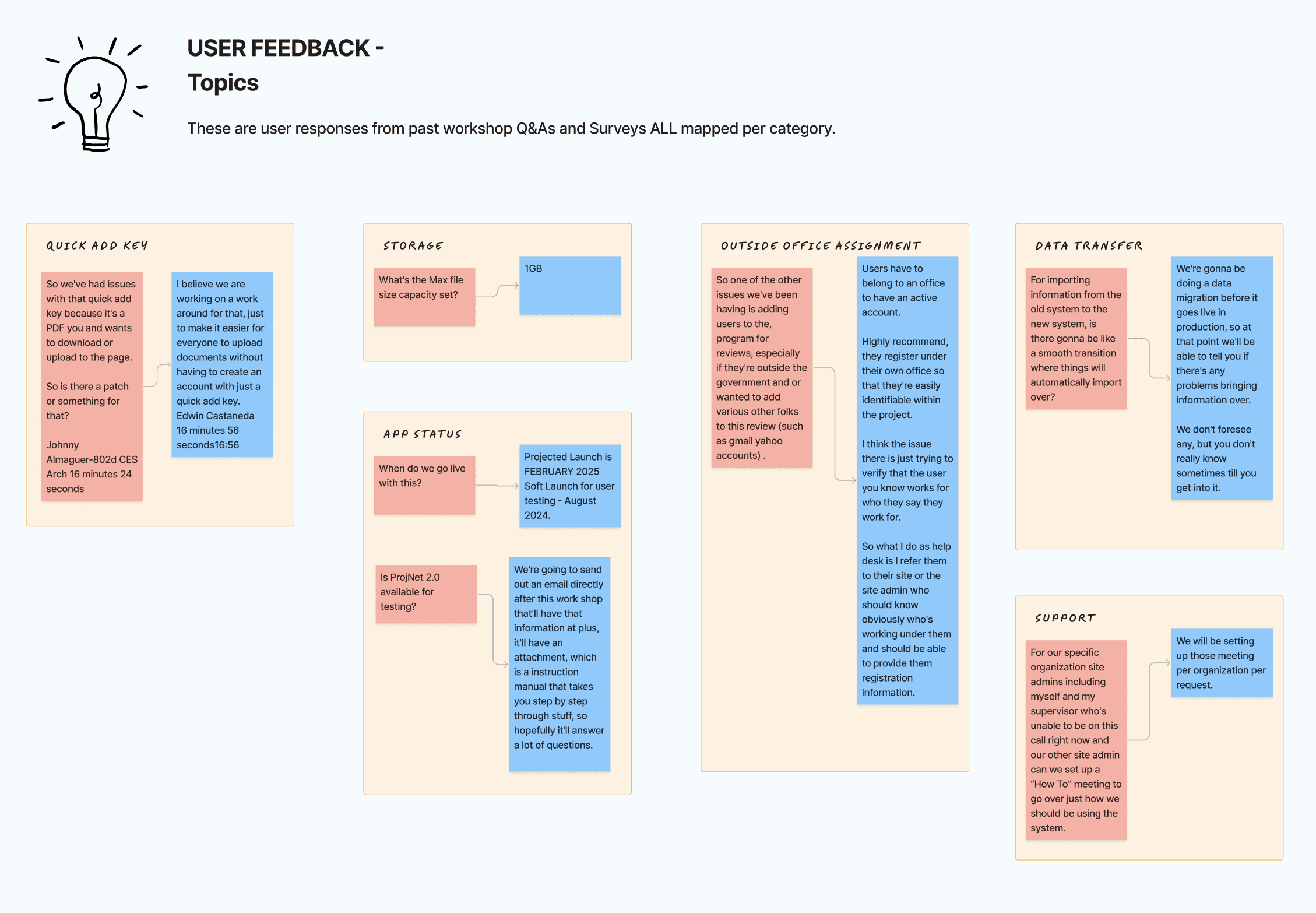
User Interviews & Workflow Analysis
I interviewed internal backend users across three groups:
• API engineers submitting designs
• Compliance/security reviewers
• Platform owners responsible for approvals
Key insights:
Users were unsure which compliance items were required at each phase.
Steps in the process did not reflect the actual internal workflow.
Users often submitted the wrong documentation because instructions were difficult to find.
Reviewers lacked visibility into status and dependency blockers.
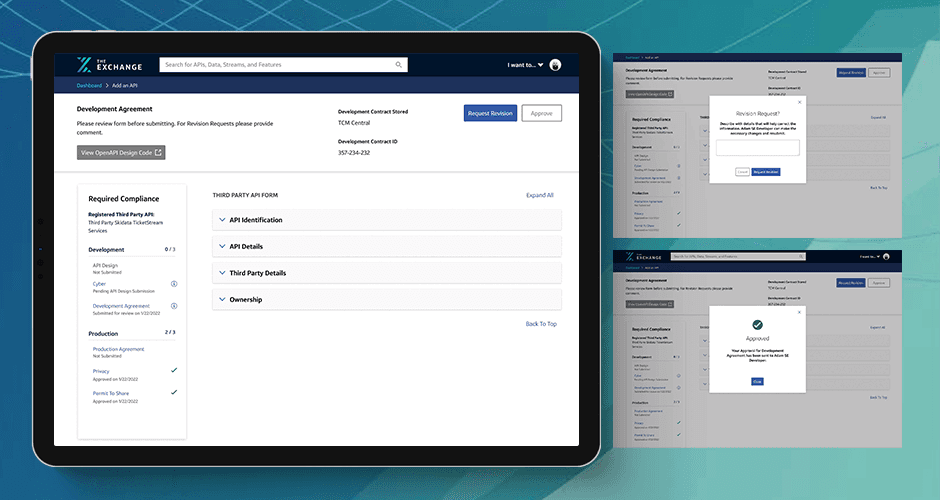
The form structure was inconsistent, and expandable sections were easy to miss.
Usability Audit
I evaluated the existing interface (shown in the screenshot) and documented issues related to:
Confusion between Development vs. Production compliance buckets
Expandable panels hiding critical content
Labels that required operational knowledge not all users had
Inconsistent use of help icons and missing inline guidance
Lack of progress indicators
Comparative Insight
I analyzed internal and external tools used for workflow-driven submissions (developer portals, compliance portals, API onboarding tools). Common best practices included:
Step-by-step progressive disclosure
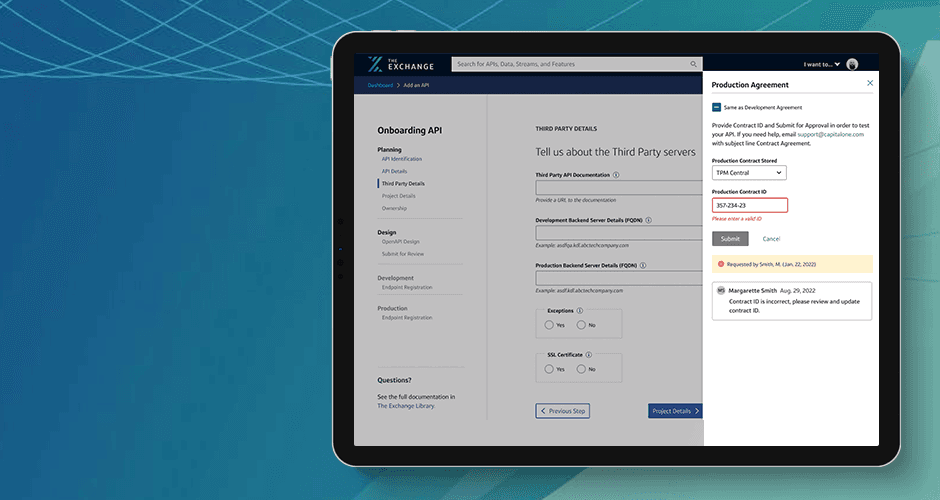
Real-time validation
Clear required vs. optional items
Integrated documentation
These insights informed a more guided, predictable experience.
Design Iterations
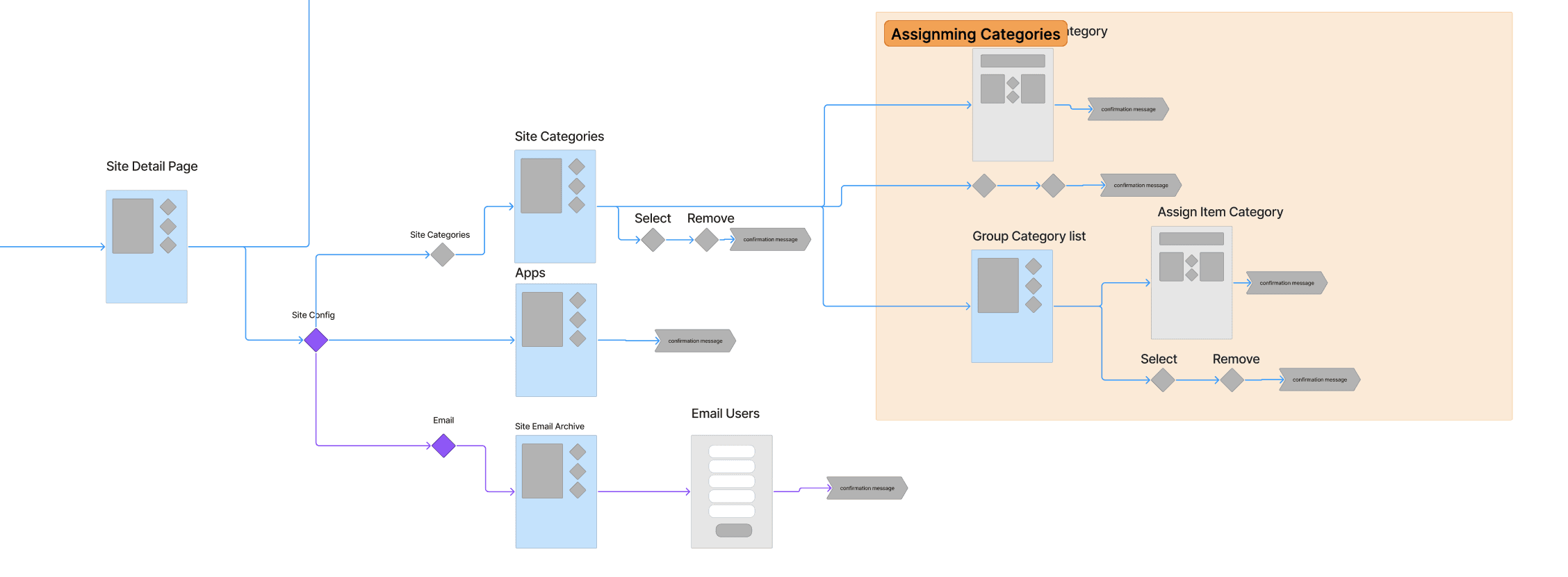
User Flows
I mapped the full API submission lifecycle, capturing pain points such as:
Repeating data entry
Missing “save as draft” clarity
Hidden required sections
Long scroll interactions
The new flow consolidated redundant steps and clarified decision points.
Feature Prioritization
High-impact enhancements included:
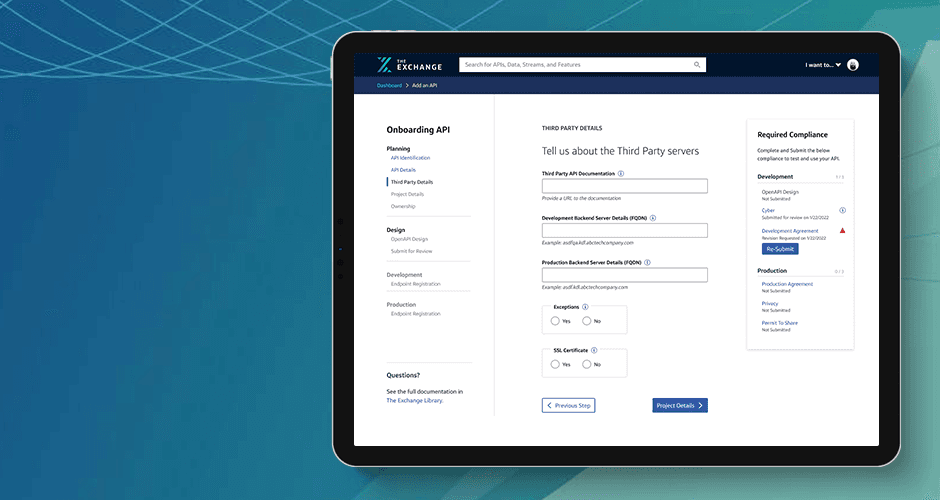
A guided, step-by-step form experience
A redesigned compliance panel showing clear progress and requirements
Inline, context-driven help and examples
A simplified structure with logical grouping of fields
A global view of completion status before submission
Wireframes & Prototypes
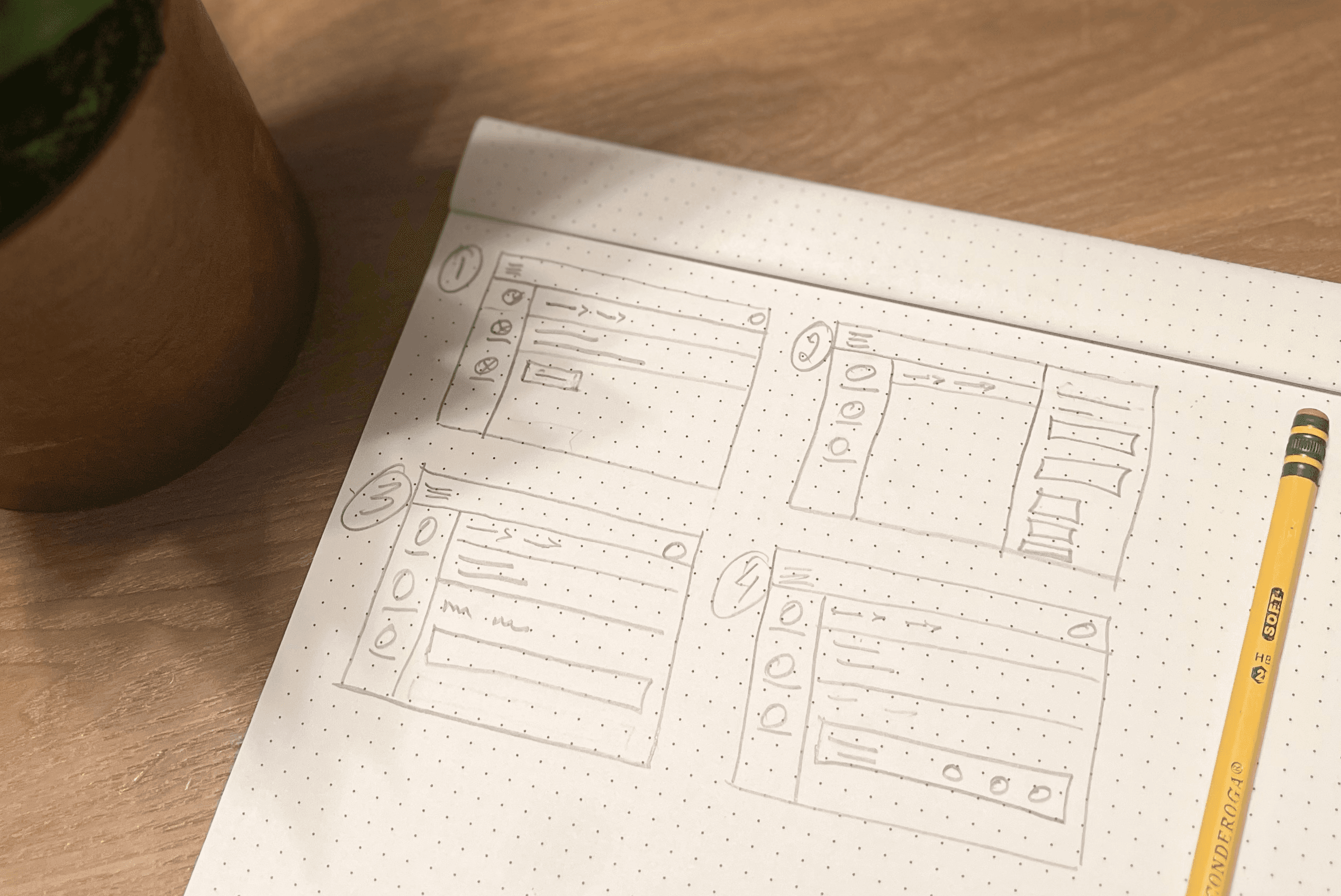
I explored multiple design models:
Accordion-less flat layout
Stepper navigation
Split-screen guidance vs. form entry
Dedicated compliance overview panel
Ultimately, we moved forward with a structured, guided workflow supported by a simplified form architecture.
Interaction Enhancements
"Expand All" became optional, as critical fields were always visible.
Required sections were surfaced dynamically.
Real-time alerts informed users of missing documents.
Status tags clarified where the API stood in the lifecycle.
Validation
Users tested the new prototype with task-based scenarios.
What improved:
Fewer mis-submissions
Faster completion time
Higher confidence among less technical users
Clearer understanding of what “done” meant
Developers confirmed the UI aligned with existing backend capabilities and would reduce back-and-forth cycles.
Results & Next Steps
Results
The redesigned Third-Party API implementation workflow delivered:
A more intuitive, guided experience
Reduced user confusion by eliminating hidden requirements
Stronger alignment across product, engineering, and governance teams
Clear compliance visibility that cut back on erroneous submissions
Improved form architecture that reduced cognitive load
Consistent UI aligned with Capital One’s design system
The changes streamlined the entire lifecycle of third-party API integration, improving efficiency for both submitters and reviewers.
Next Steps
Integrate automated validation based on API metadata
Add a real-time collaboration capability for cross-team input
Introduce role-based content to simplify the experience for non-engineers
Expand the design pattern into other workflow-heavy tools across The Exchange
Final Summary
This project demonstrates the power of user-centered design in highly technical environments. By deeply understanding user roles, operational workflows, and compliance requirements, I delivered a streamlined API submission experience that reduced friction, increased clarity, and improved speed across Capital One’s developer ecosystem.