" height="136px" id="PfaV7hBGi" transform="translate(119 2)" width="40px"/><path d="M 39.868 162.364 L 0 122.39 L 0 39.974 L 39.868 0 Z M 78.938 97.221 L 119 97.221 L 119 138 L 67.562 190 L 40.359 162.712 L 78.938 124.013 Z" fill="rgb(0, 0, 0)" height="189.99999947846123px" id="rWSc6CRIY" width="119px"/></g></svg>)
US Army
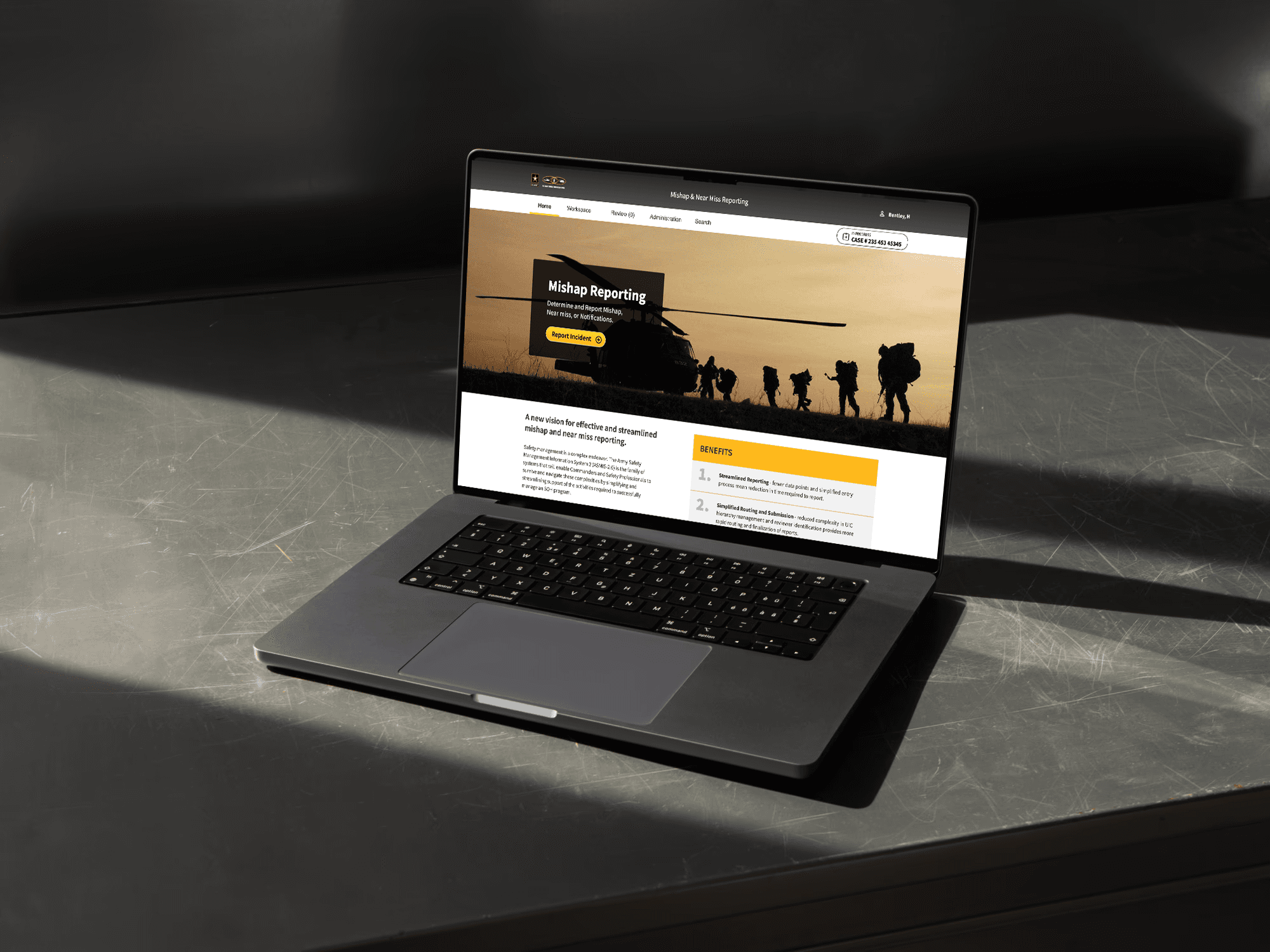
ASMIS 2.0 – Mishap & Near-Miss Reporting Tool
Client
Army Installation Restoration Programs (IRPs)
Platform
Axure
Role
Senior UX Designer
Focus
UX Design, UI Design, Hi-Fi Prototyping
Modernizing Army Safety Reporting for Faster, Smarter Decision Making
Safety management in the U.S. Army is a mission-critical function, yet historically it has involved complex reporting processes, fragmented data systems, and heavy administrative burden on Safety Officers and Commanders. The Army Safety Management Information System 2 (ASMIS-2.0) is a family of modernized digital systems built to simplify and strengthen Army Safety and Occupational Health (SOH) programs.
As part of this ecosystem, the Mishap & Near-Miss Reporting Tool was designed to make it easier for safety personnel to report incidents, accelerate access to reliable data, and improve Army-wide visibility into trends that can prevent future injuries and loss.
Project Goal
To streamline and modernize mishap and near-miss reporting while improving data quality, reducing reporting time, and increasing Army leaders’ ability to make informed safety decisions.
My Role
Lead UX/UI Designer responsible for research synthesis, user journey mapping, interaction design, wireframes, prototyping, usability testing, and collaboration with cross-functional engineering and Army safety SMEs.
Project Duration
Multi-year modernization effort with four years of expert engagement.

The Problem
Safety Officers across Army installations reported significant challenges:
Challenge | Impact |
|---|---|
Reporting required extensive, repetitive data entry | Increased workload, reporting delays |
Forms varied across units and commands | Inconsistent safety documentation |
Limited visibility into near misses | Lost opportunities for prevention |
Disconnected data systems | Incomplete picture of safety risk |
Reports difficult to analyze | Slow and reactive safety responses |
Without streamlined reporting and actionable insights, the Army risked delayed mitigation, recurring incidents, and reduced operational readiness.
UX Strategy & Information Architecture
Design Objectives
Reduce reporting burden with simplified, adaptive form logic
Improve data accuracy through embedded validations and authoritative data integration
Increase transparency and visibility at unit, installation, and Army-wide levels
Enable future data correlation with TRICARE, workers’ comp, and injury databases
Key UX Deliverables
User Personas & Journey Maps
Streamlined Workflow Maps
Data Dictionary & Field Rationalization
Site Mapping for ASMIS-2.0 Navigation
Mid- and High-Fidelity Prototypes in Figma
Design System Integration (508 & WCAG Compliant)
Design Iterations
Major Improvements Delivered
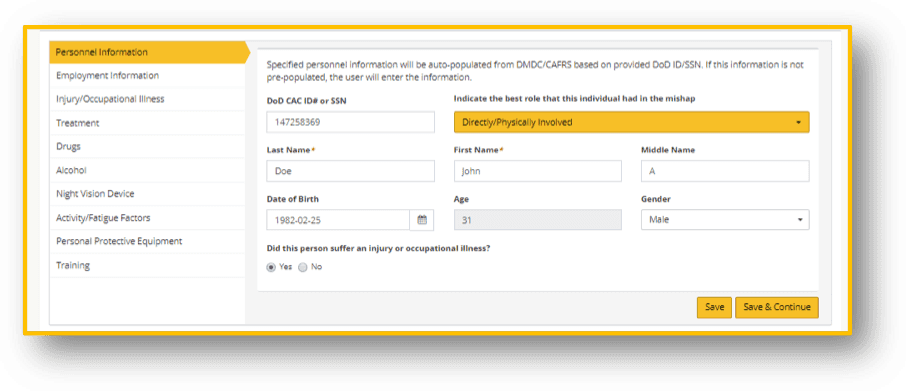
Before: Long, open-ended forms, repetitive fields, unclear requirement steps
After: A guided reporting wizard with progressive disclosure, allowing the system to tailor questions based on incident type, severity, and personnel involved.
Feature Enhancements
✔ Smart inputs and data pre-population from Army personnel systems
✔ Inline help and policy references for accurate classification
✔ Attachment and media support for photos, documents, and statements
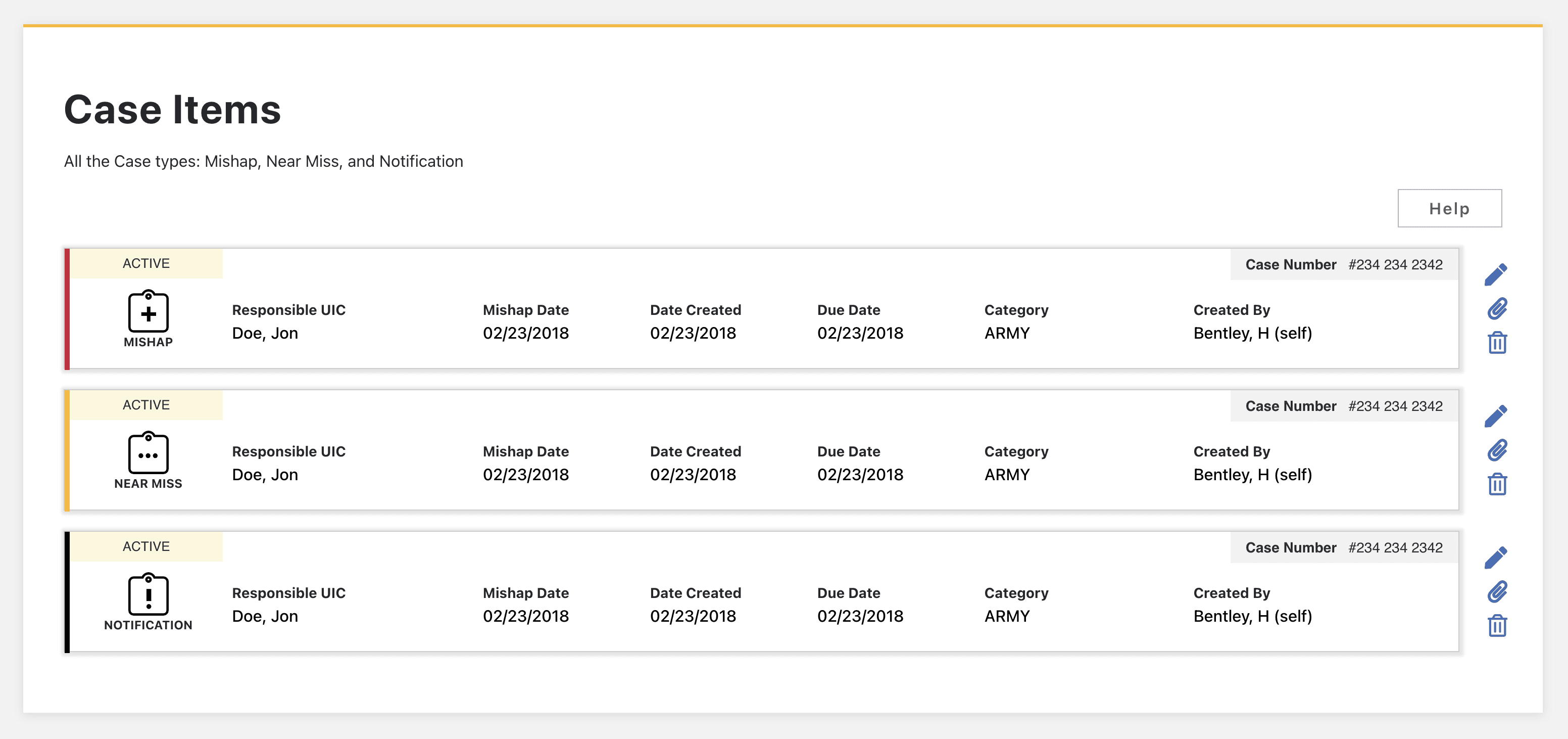
✔ Unit-level and Army-wide analytics dashboards
✔ Ability to flag near-misses for trend analysis
✔ Commanders’ view for prioritizing corrective actions
Example UI Concepts (described for portfolio imagery)
Dashboard: real-time metrics, high-risk categories, trend alerts
Form Wizard: step-based guided reporting with autosave
Review Screen: summary verification before submission
Analytics View: heat maps, causal factor charts, seasonal patterns
Outcomes & Impact
Measured & Expected Benefits
Reduced reporting time for Safety Officers
Higher reporting accuracy due to structured decision guidance
Increased near-miss reporting, enabling earlier intervention
Improved readiness through data-driven safety decisions
Future capability to merge TRICARE and workers’ comp data for holistic analysis
Strategic Army Impact
This modernization supports:
Enhanced operational safety and risk prevention
Stronger Army-wide standardization
Reduced administrative burden
Better mission readiness and force protection
Next Steps
Planned enhancements include:
⮕ Integration with TRICARE and workers' compensation databases
⮕ Machine-learning-assisted risk categorization and pattern detection
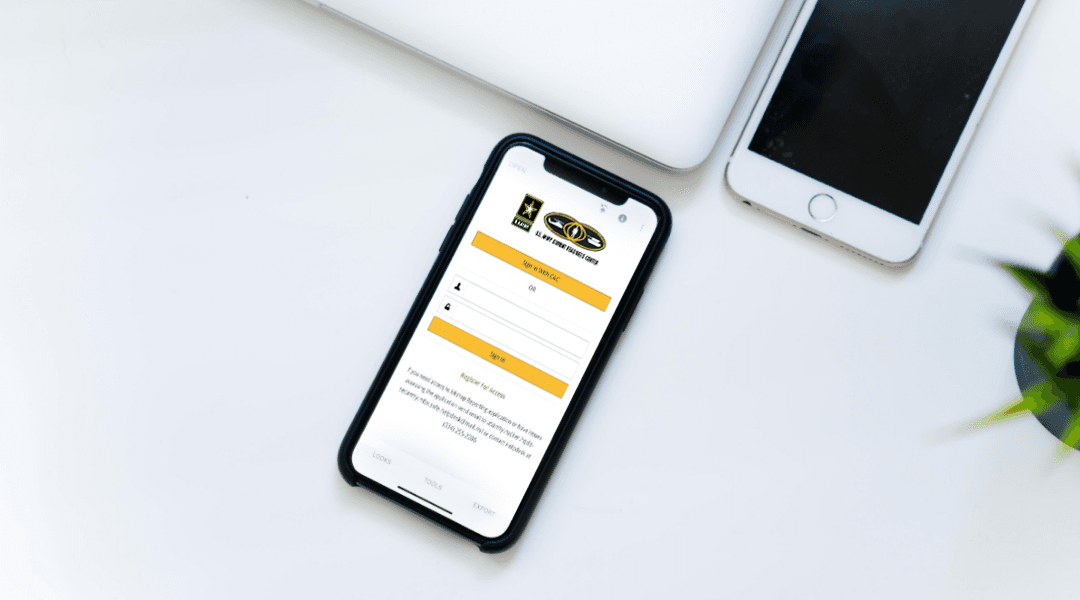
⮕ Mobile-first reporting for field accessibility
⮕ API access for safety center research and training development
Conclusion
The Mishap & Near-Miss Reporting Tool represents a major shift in how the Army approaches mishap prevention and operational safety. By reducing reporting friction, improving data visibility, and preparing the system for integrated health and accident intelligence, this modernization lays the foundation for a safer and more resilient Army.
This UX effort demonstrates the power of human-centered design in high-stakes environments where clarity, speed, and accuracy directly support mission success.